
Multicentre gene therapy for OTOF -related deafness followed up to 2.5 years – USA News 24 April 2026
In a multicentre trial of AAV1-hOTOF gene therapy involving 42 participants aged 0.8–32.3 years with autosomal recessive deafness 9, treatment demonstrated sa
Date: April 24, 2026 | Source: Nature.com | Category: USA News
Overview
In a multicentre trial of AAV1-hOTOF gene therapy involving 42 participants aged 0.8–32.3 years with autosomal recessive deafness 9, treatment demonstrated safety, tolerability, and improved hearing and speech perception, with age and distortion product otoac…
Key Details
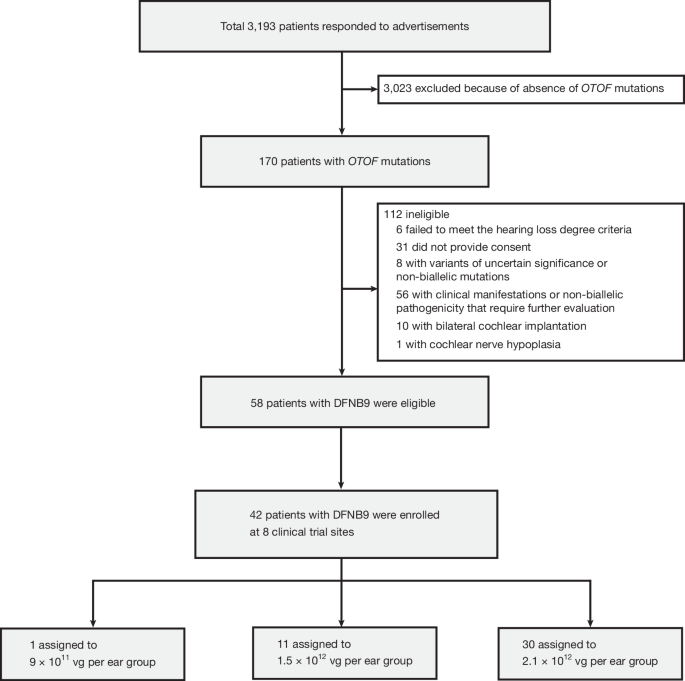
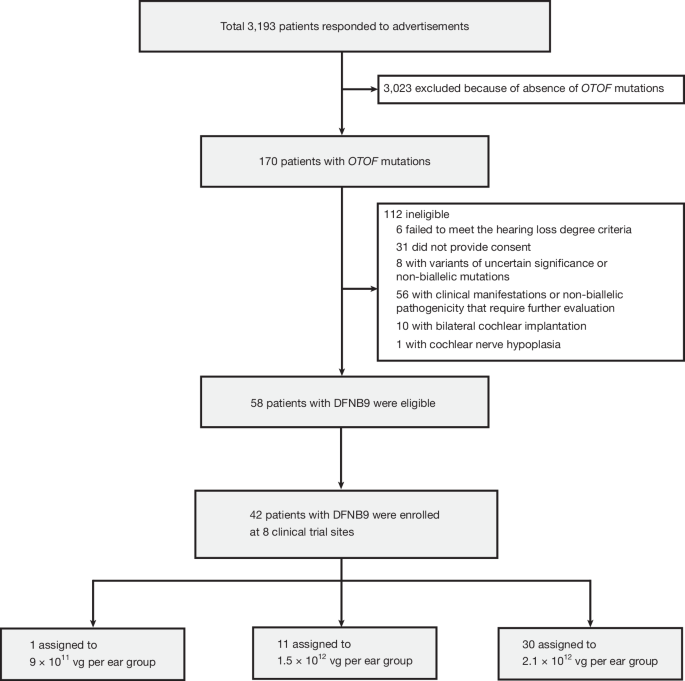
Autosomal recessive deafness 9, caused by OTOF gene mutations, is characterized by severe-to-complete congenital deafness1. Although gene therapy has shown benefits in a small number of patients2,3,4,5, its safety and efficacy across broader age ranges and longer follow-up periods, as well as predictors of treatment outcomes, remain unclear. In this single-arm, multicentre trial conducted at eight centres, 42 participants (aged 0.8–32.3 years) received adeno-associated virus (AAV) serotype 1 carrying a human OTOF coding transgene (AAV1-hOTOF) at three vector dose groups, with up to 2.5-year follow-up. The primary end point was dose-limiting toxicity within 6 weeks. The secondary end point assessed efficacy and adverse events. No dose-limiting toxicities were observed. Grade 3 adverse events included decreased neutrophil count. Hearing was recovered in 90% of participants treated with AAV1-hOTOF, with gradual and stable improvement in auditory brainstem response threshold from greater than 97 ± 1 dB normalized hearing level at baseline to 54 ± 3, 51 ± 3, 50 ± 3 and 42 ± 5 dB normalized hearing level at 1, 1.5, 2 and 2.5 years, respectively, and behavioural audiometry improving from greater than 96 ± 3 dB hearing level at baseline to 37 ± 5 dB hearing level at 2.5 years. Participants aged 0.5–18 years showed greater hearing improvement than adults. A higher number of present distortion product otoacoustic emissions at baseline or biallelic non-truncated OTOF variants was associated with better hearing recovery. Participants with hearing recovery demonstrated gradual improvement in speech perception. AAV1-hOTOF is well-tolerated and efficacious across a broader patient population, with sustained therapeutic benefits for up to 2.5 years. Chinese Clinical Trial Registry registration: ChiCTR2200063181.
This is a preview of subscription content, access via your institution
Access Nature and 54 other Nature Portfolio journals
Get Nature+, our best-value online-access subscription
Receive 51 print issues and online access
Prices may be subject to local taxes which are calculated during checkout
Why This Matters for Exam Students
This USA news is important for students preparing for competitive exams including UPSC, SSC CGL, SSC CHSL, Railway RRB NTPC, IBPS PO, SBI PO and all state PSC examinations. Current affairs and general awareness are key sections in all these exams.
Frequently Asked Questions (FAQ)
- When was this news published?
- April 24, 2026
- What is this news about?
- In a multicentre trial of AAV1-hOTOF gene therapy involving 42 participants aged 0.8–32.3 years with autosomal recessive deafness 9, treatment demonstrated safety, tolerability, and improved hearing and speech perception, with age and distortion product otoac…
- Which exams cover this topic?
- UPSC, SSC CGL, SSC CHSL, Railway RRB, IBPS, SBI PO, and all State PSC exams.
- Who reported this news?
- Nature.com
Conclusion
Stay updated with the latest USA current affairs on Government Naukri Alert. Bookmark this page and visit daily for fresh exam-relevant news and government job updates.
Source: Nature.com
📌 Also Read:
→ Latest Government Jobs 2026
→ Gujarat Government Jobs 2026